Things that don’t change

Keeping track of – signs has always been the bane of my attempts at math. Somehow I always manage to lose track of at least one – sign during the course of working out a problem.

On one notable occasion working on a homework assignment for a boundary value problems class (partial differential equations galore), one question evolved into 13 pages of math scribblings. Eventually I decided it was far too ugly to be any kind of correct, so I pitched it all and started over. I found my mistake in a single – sign on the second page and wrote the solution up in 4 pages.

20 years later, things haven’t changed. Still making the same mistakes with – signs or other silly little math errors. On the BioE 846 quiz I got back today, one of the easier questions I ended up getting wrong because of an off-by-1 mistake.

One positive: with the additional years of experience, I’m at least catching most of my stupid little mistakes earlier.


7 years, 2211 blog entries

Last week the blog ticked over the 7 year mark and I managed to miss it. 7 whole years. Wow, that’s like ancient in Internet years.

On to year number 8.

Gas and oil prices

In a Twitter response to the last blog post about gas prices, @LincJosh asked

I would like to see this with a price per barrel comparison! #rippedoff

Being the geek that I am, how could I resist this.

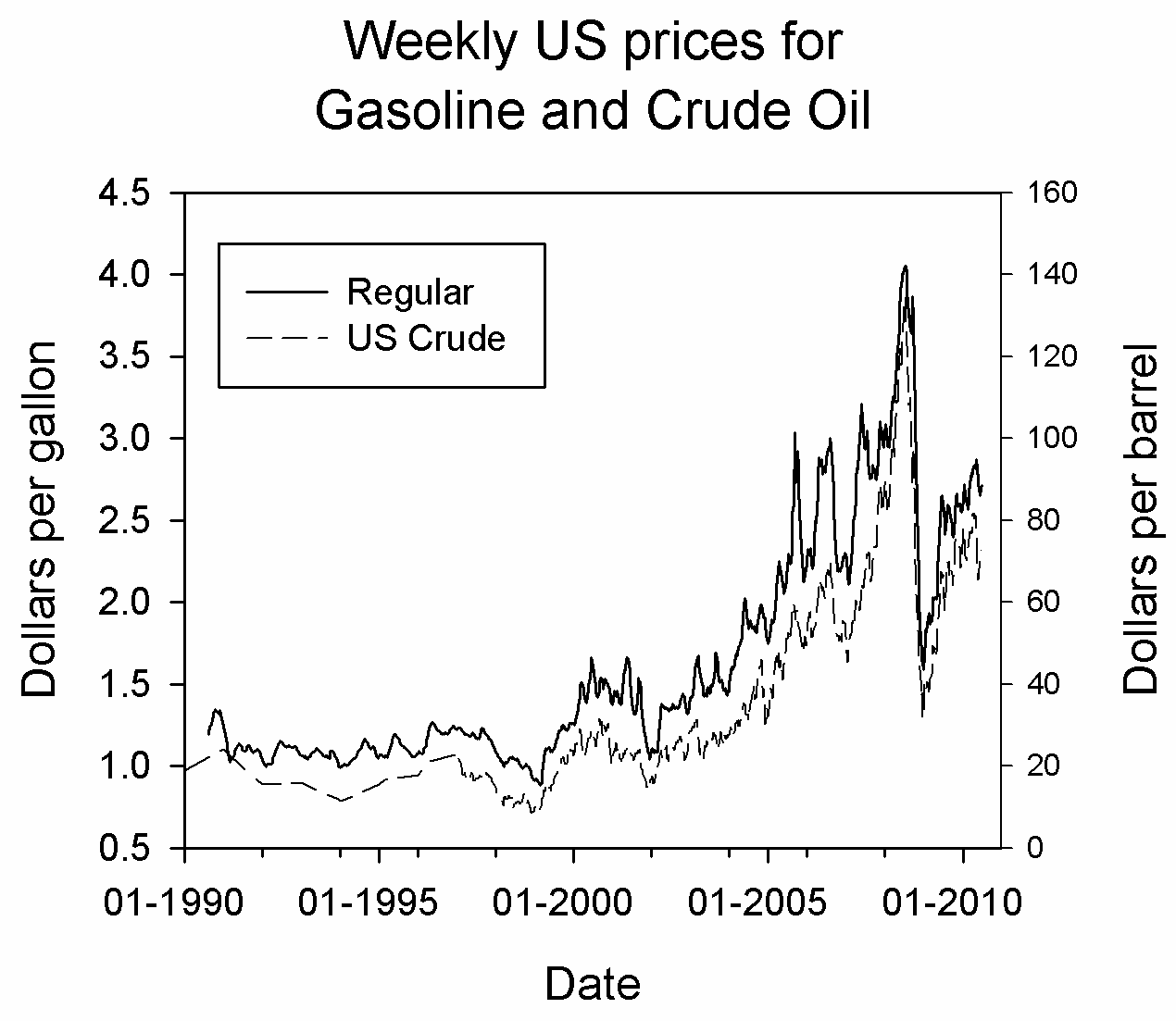
Plotted is the price per gallon of regular gasoline (solid line, left axis) and something called the “Weekly United States Spot Price FOB Weighted by Estimated Import Volume” (dashed line, right axis).

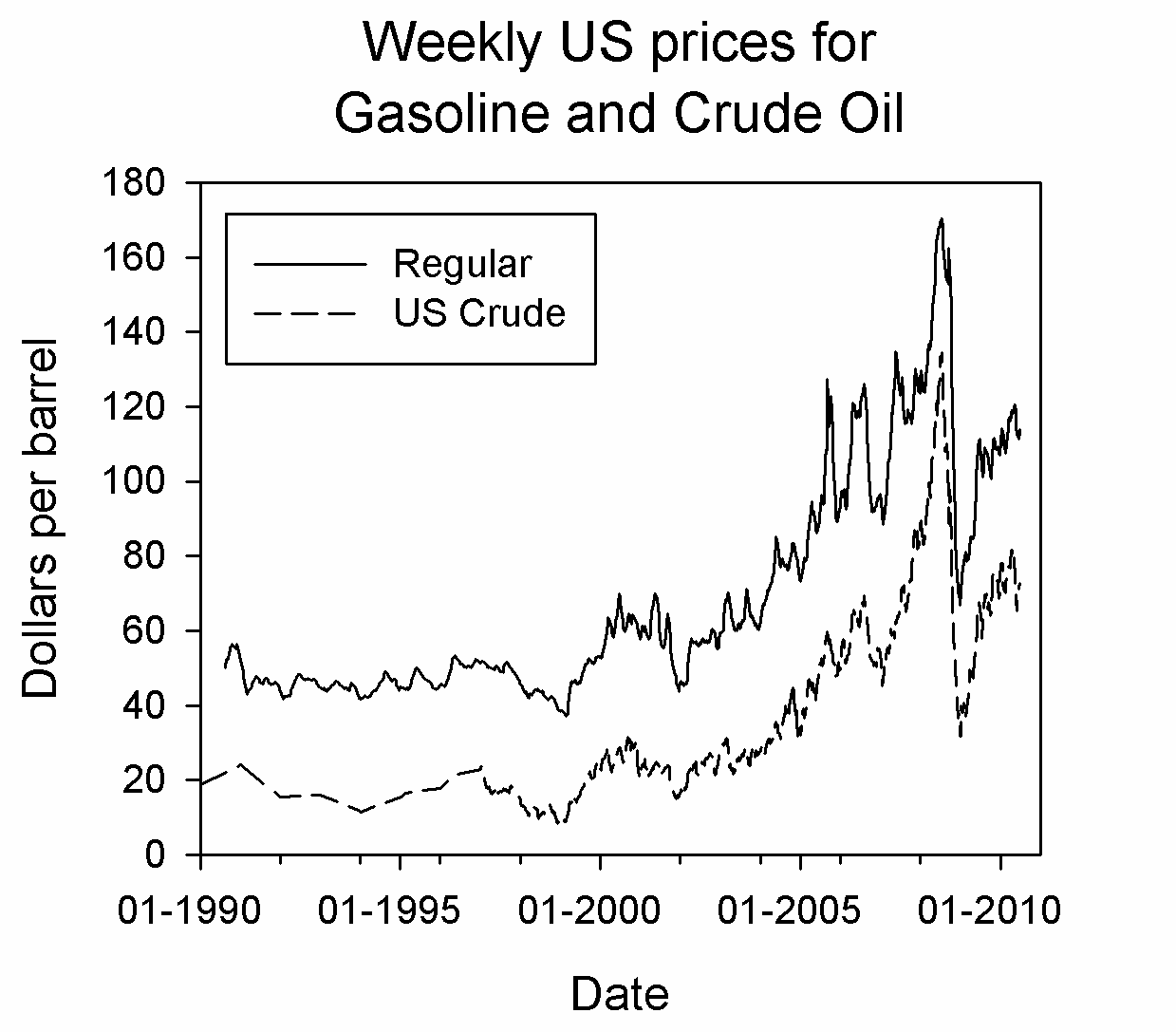
On a price per barrel basis (regular gas – solid line, US crude – dashed line),

The numbers are all ripped out of Petroleum Price Database kindly provided by the US Energy Information Administration and used in its raw unprocessed form.

10 years of gas prices

When I first got the Camry, I decided to keep track of how much gas I was putting into it. It was a way of putting ThinkDB to work on my Handspring Platinum.

Although the graph only indicates what I’ve paid for gas over the years, it should track reasonably well with the regional and national averages.