It’s been 6 months with the cell phone now. Kinda sorta remembering what the number is.
The whining on some of the Motorola Cliq forums has reached epic proportions ever since Motorola let their Q2 target for delivering the Android 2.1 upgrade slip to some unspecified date later on.
The Cliq is keeping me more in touch with things going on in the Twitter world, where before I was pretty much offline whenever I wasn’t near the computer. Kinda good sometimes. Calendar and contacts management still remains on my T3 though, but stuff ends up going to both places.
The “ooo shiny!” factor is starting to fade. The on-screen keyboard is pretty useless. Although the Cliq does lots of cool stuff, I still find it slow and clunky compared to my T3.
Inside the new computer is an nVidia GTX260 video card, which I think is pretty spiffy. It also means I should be able to activate all the cool Compiz eye candy.
While I was running the alpha and beta versions of Fedora 13, everything with the new computer (aside from a couple of minor USB related issues) was working quite nicely. Had the nVidia drivers installed and running. The Compiz eye candy was very pretty.
And then Fedora 13 was officially released. Updated everything, grabbed the ‘official’ nVidia drivers off rpmfusion, and then the pretty eye candy was gone!
Hmm, strange. Let’s try reinstalling the drivers. No joy. Let’s try reinstalling the Fedora. No joy.
Do all the usual troubleshooting. Why is there no GLX (explaining the lack of Compiz eye candy).
A couple of kernel updates later, and still no joy.
All I have to show are some strange things being logged to the Xorg log file and no pretty eye candy. Google is of no help either. Annoying, but there is still video, and if I XRender instead of OpenGL for compositing (in KDE), I can still get a few effects. It’s all very strange.
Took advantage of a sunny-but-not-roasting-hot afternoon to go outside and play with the polarizingfilter I bought a little while ago. I haven’t used it too much because I just keep forgetting to pack it along with me. So I wandered up the block to the ponds, set up the camera on the tripod and started to play.
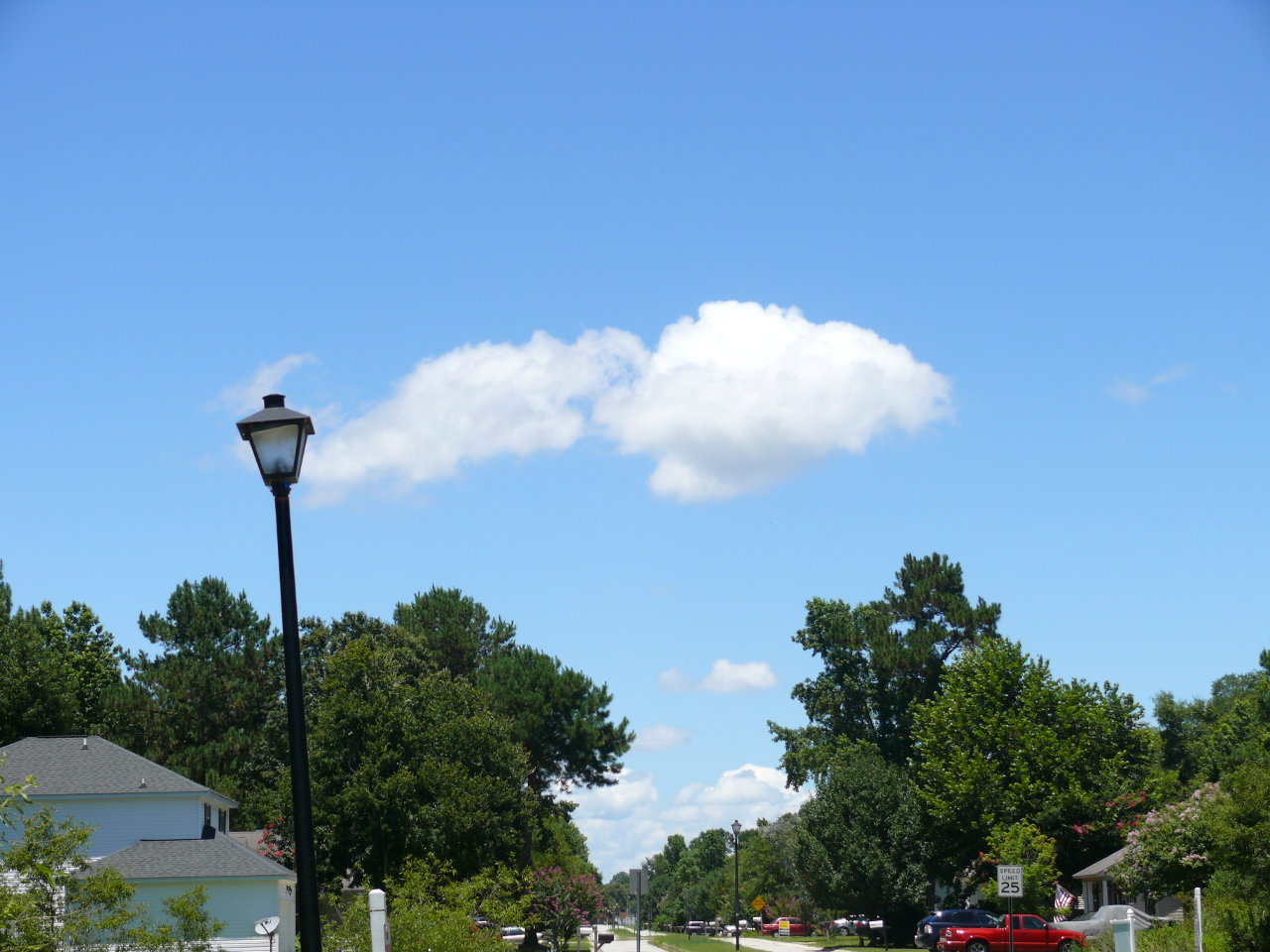
First, without any filter. Pointed the camera down the street at a lone cloud in the sky, with the sun mostly to my left.
f4.0, 1/1000 s, ISO 100, aperture priority
No polarizing filter f4.0, 1/1000 s, ISO 100, aperture priority
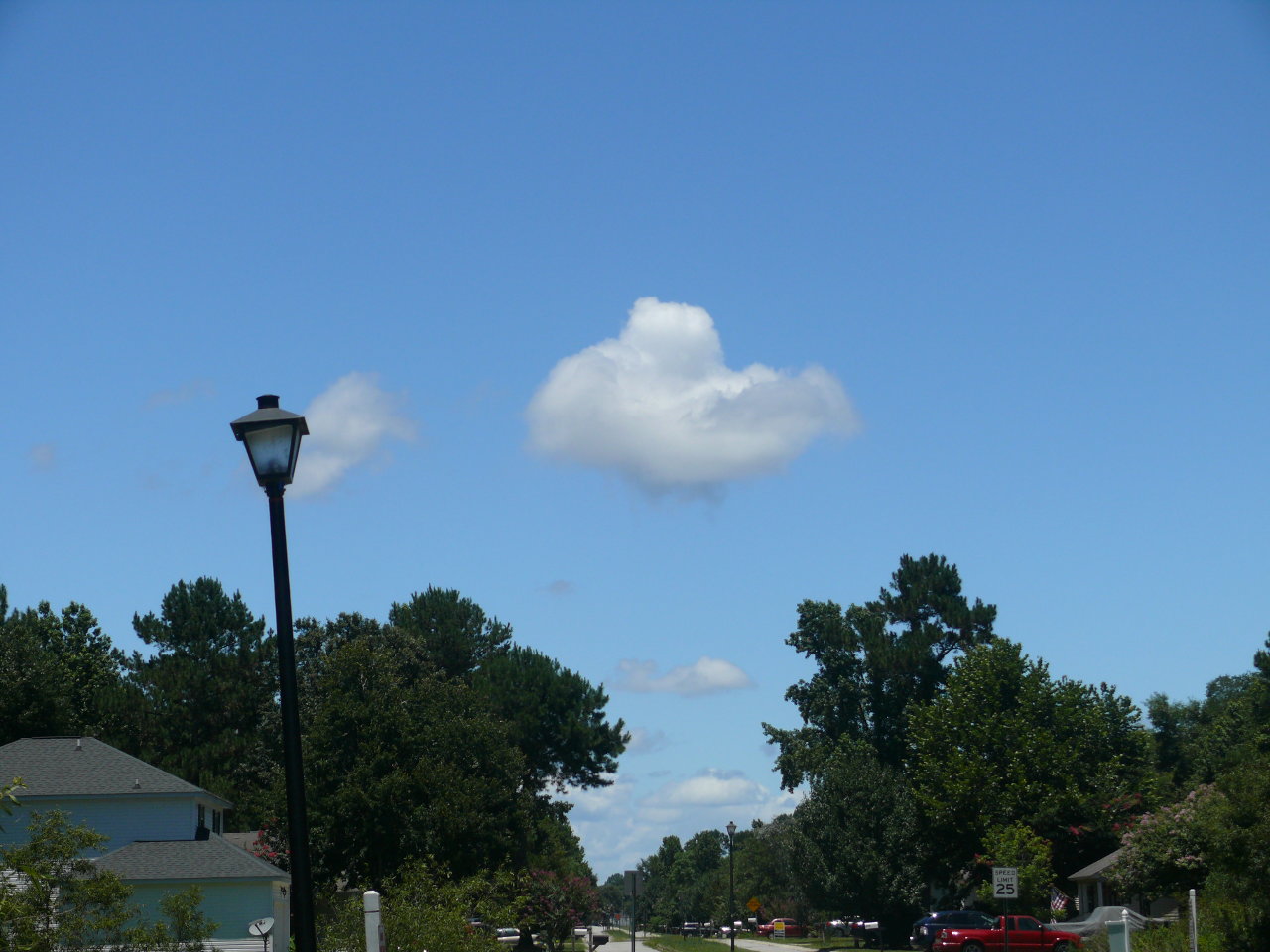
Then put the polarizer on and turned it to get the minimum amount of polarization. The image is a little darker because the filter does have a little bit of tint to it.
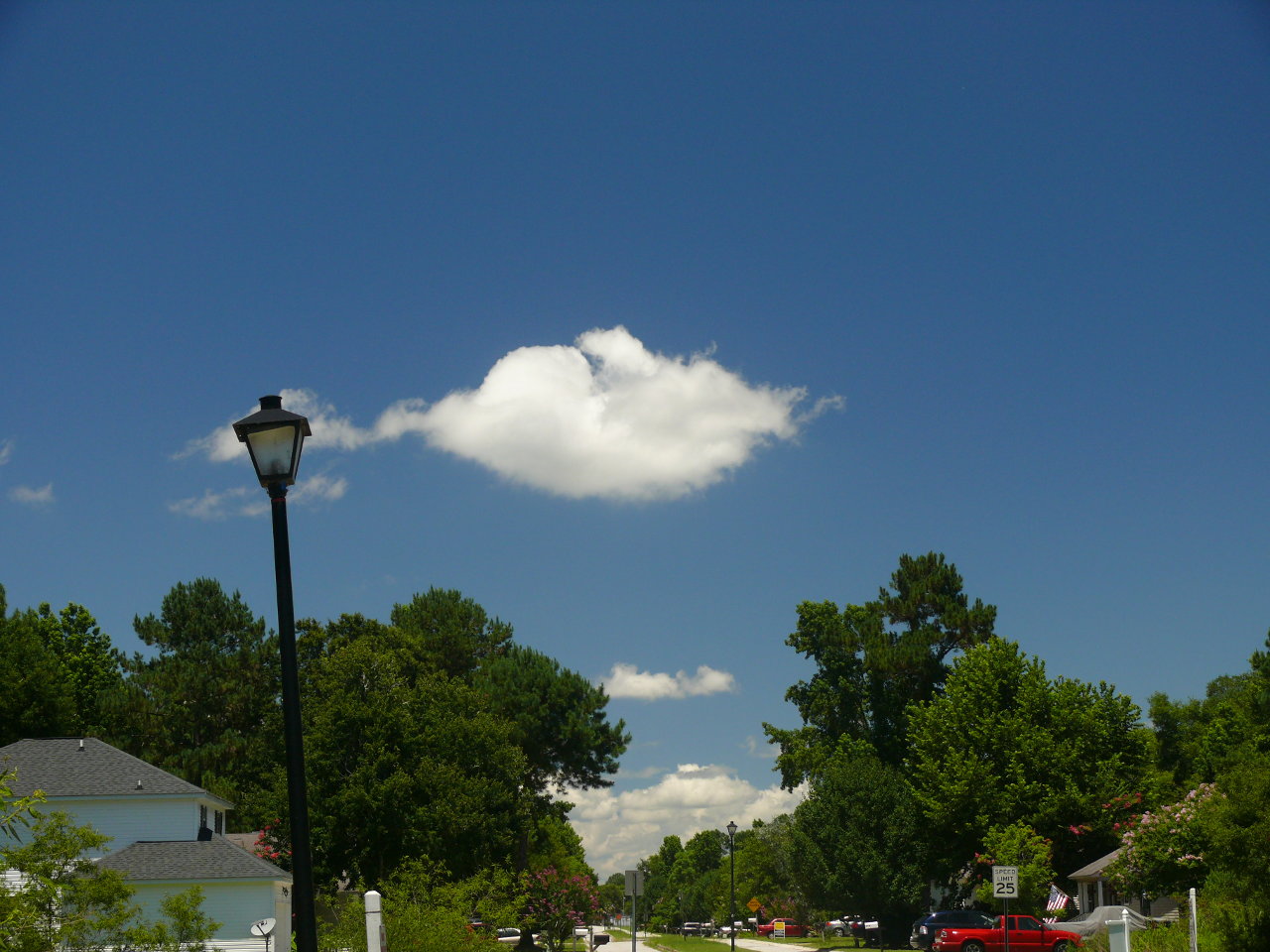
Turned the polarizer 90° to get the maximum amount of polarization. The effect is quite dramatic. The sky gets much darker and really makes the cloud pop out. The greens really come through too and the colours look more saturated.
f4.0, 1/400 s, ISO 100, aperture priority
Polarizing filter maximum polarizing f4.0, 1/400 s, ISO 100, aperture priority
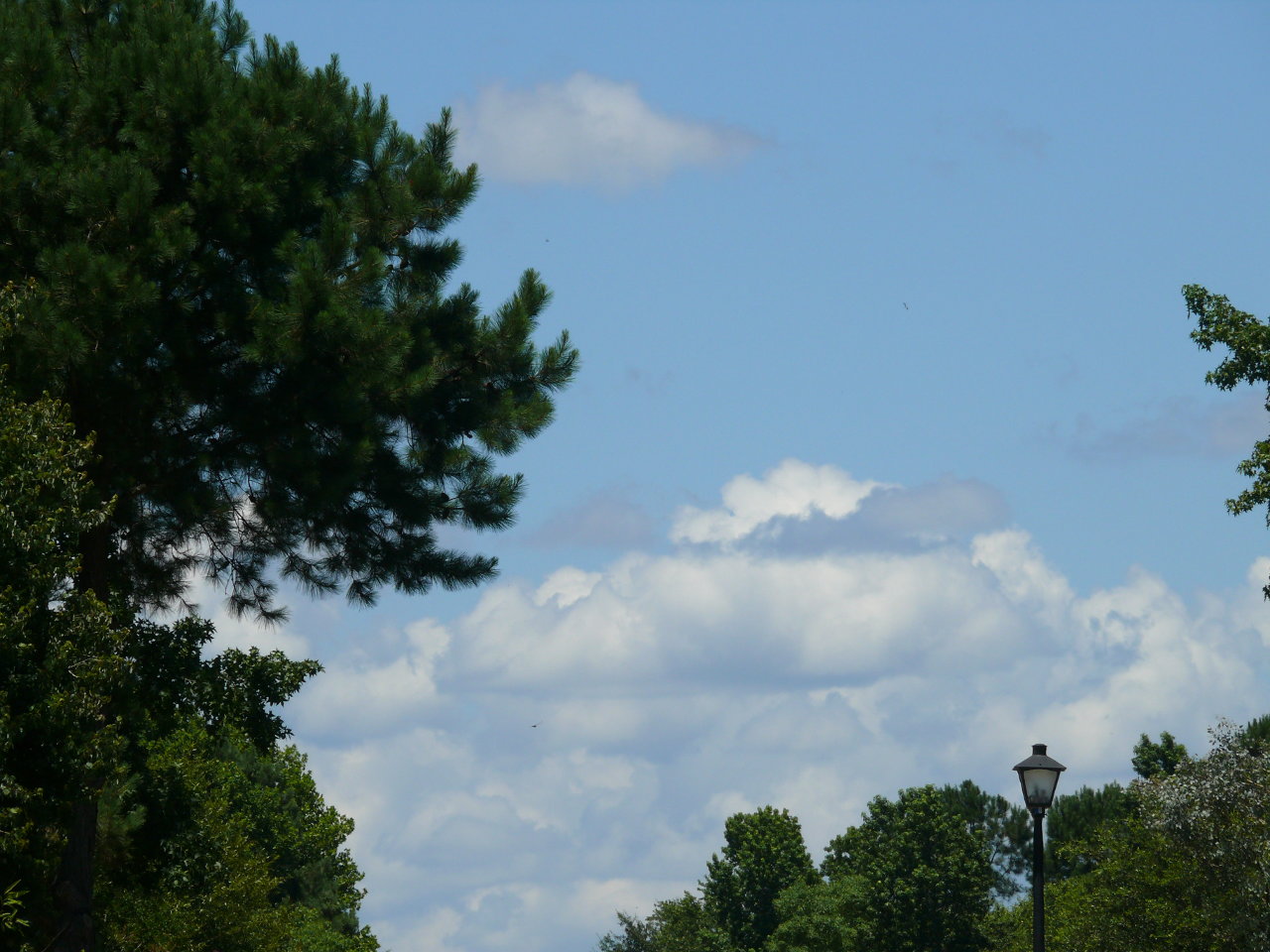
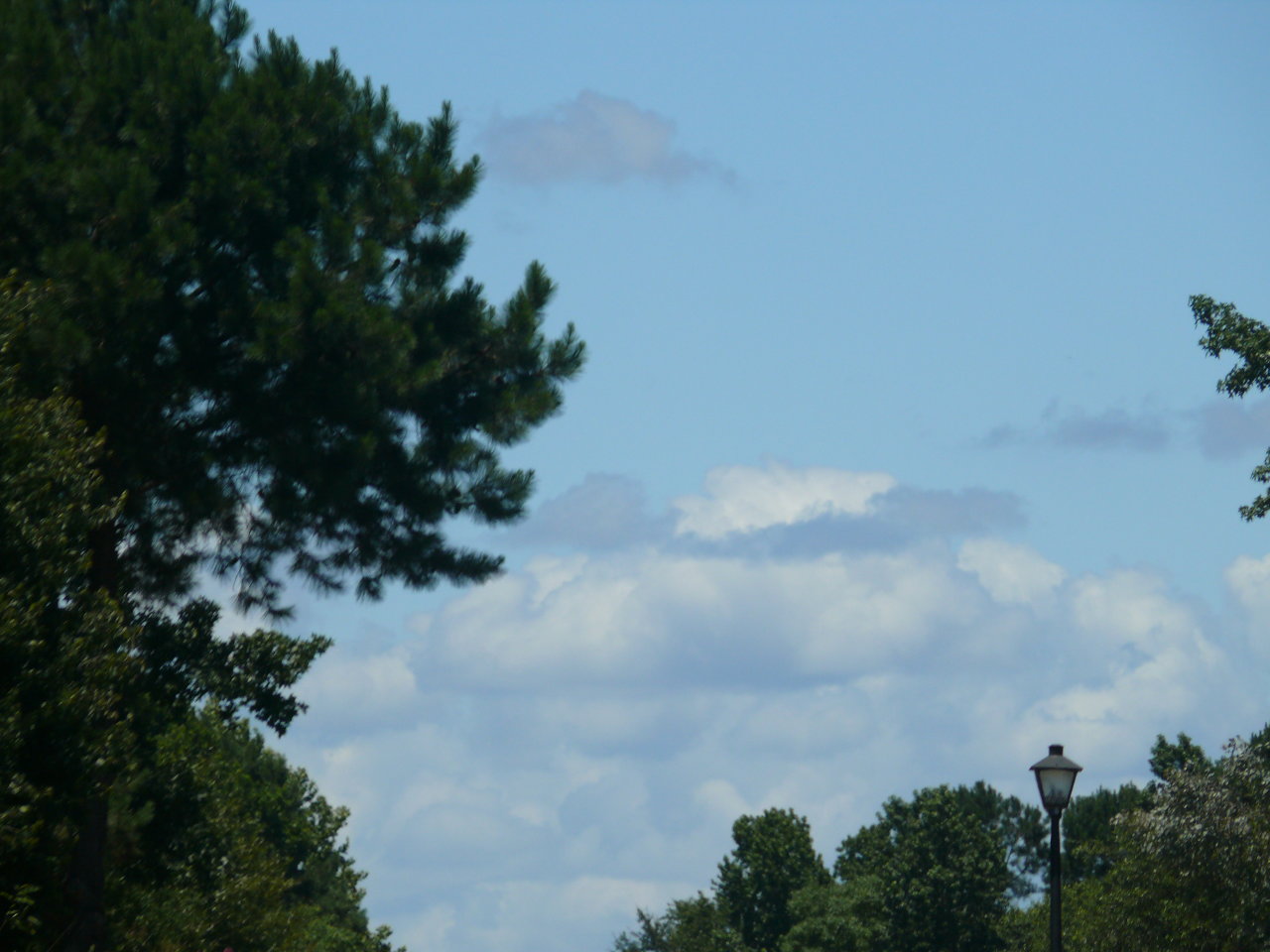
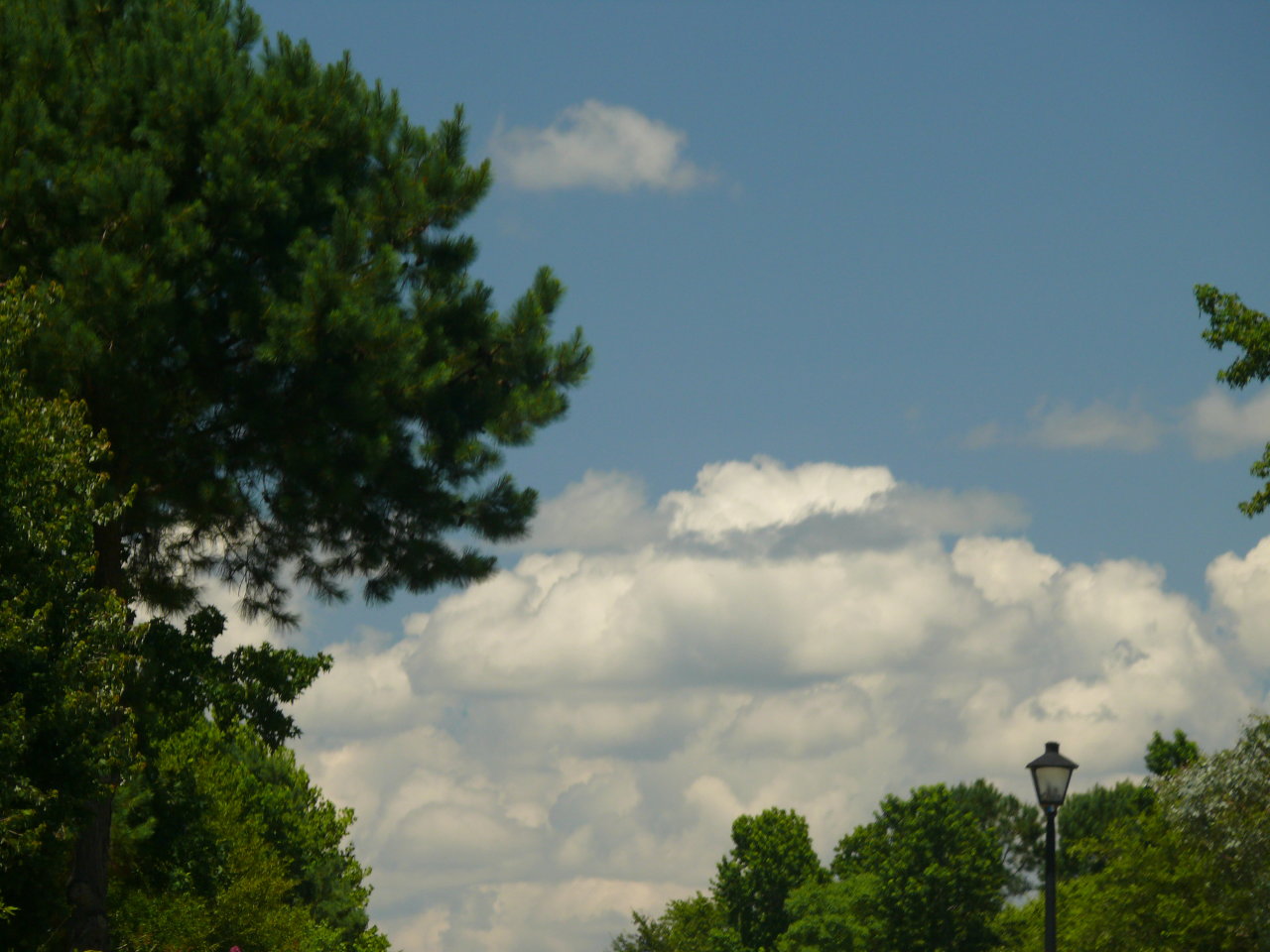
Next I zoomed in on the clouds down by the horizon. First with no filter
f8, 1/500 s, ISO 100, auto
No polarizing filter f8, 1/500 s, ISO 100, auto
Then with the filter on and turned to minimum polarizing. The clouds look pretty flat and boring, and don’t really stand out at all.
f5.6, 1/400 s, ISO 100, auto
Polarizing filter minimum polarization f5.6, 1/400 s, ISO 100, auto
Turning the filter 90 degrees really makes things pop out.
f5.6, 1/250 s, ISO 100, auto
Polarizing filter max polarization f5.6, 1/250 s, ISO 100, auto
Will definitely have to remember to keep the polarizer with me.
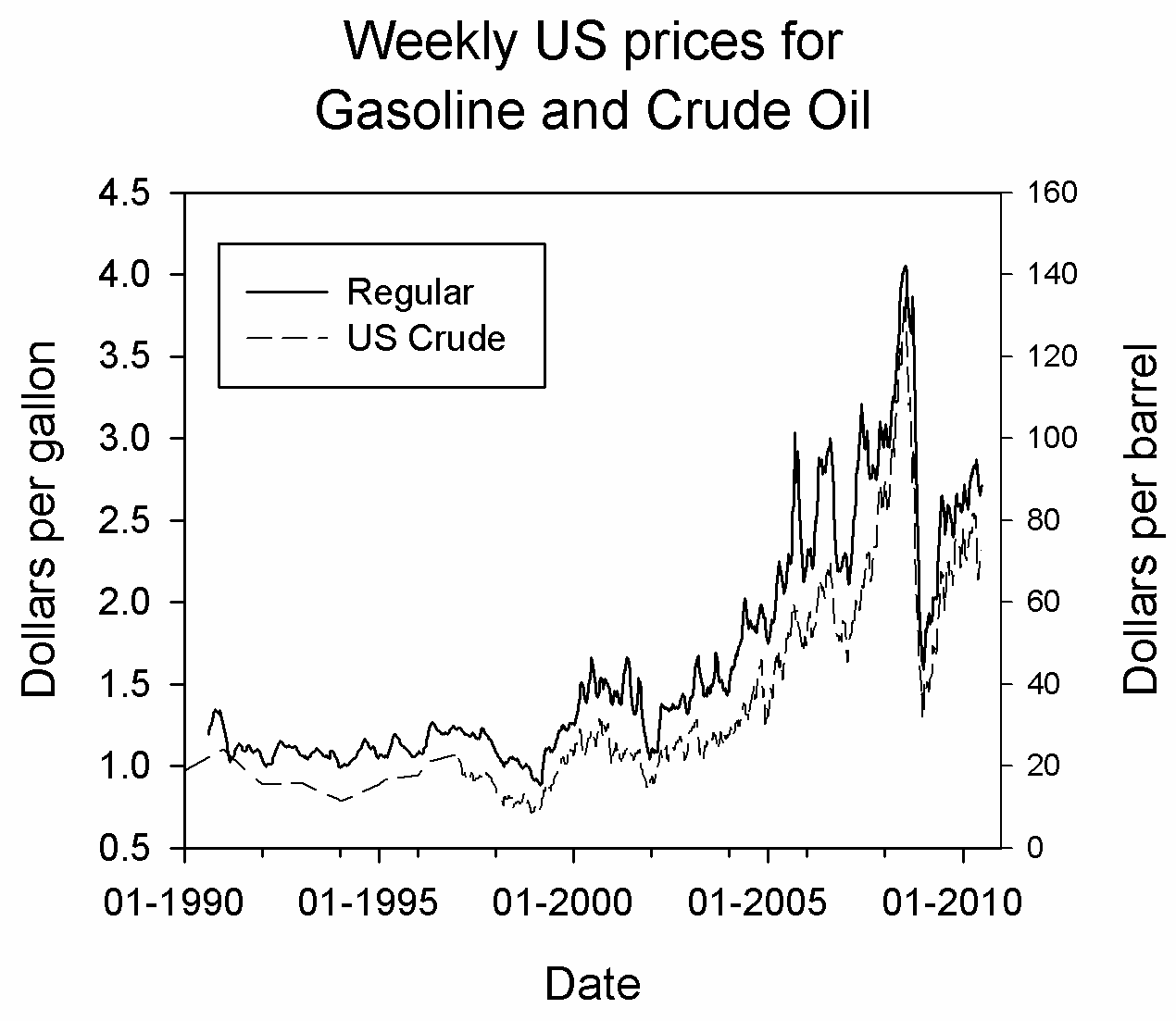
In a Twitter response to the last blog post about gas prices, @LincJoshasked
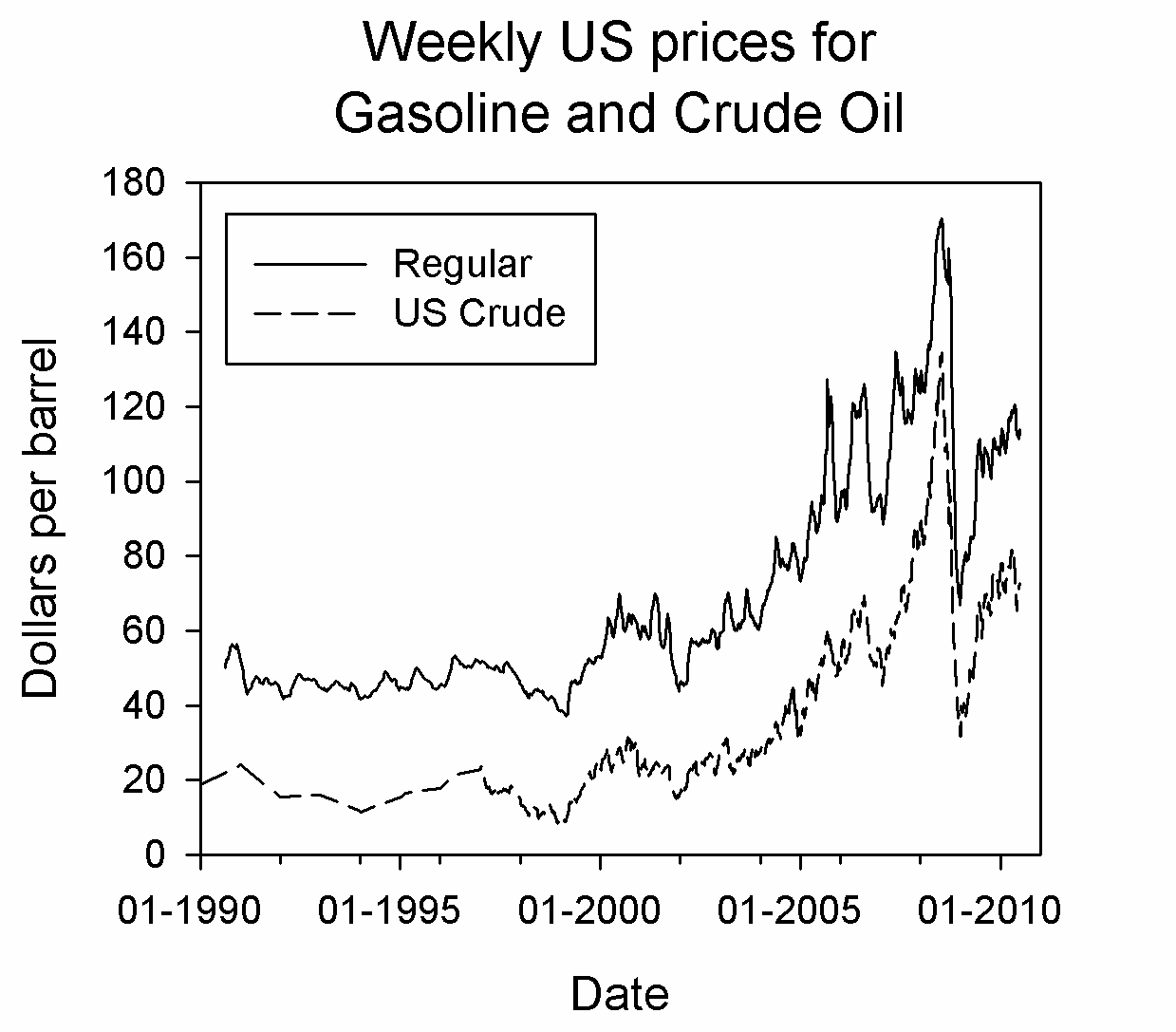
I would like to see this with a price per barrel comparison! #rippedoff
Being the geek that I am, how could I resist this.
Plotted is the price per gallon of regular gasoline (solid line, left axis) and something called the “Weekly United States Spot Price FOB Weighted by Estimated Import Volume” (dashed line, right axis).
On a price per barrel basis (regular gas – solid line, US crude – dashed line),