The workbench

Thought I’d show off some pictures of the current state of my workbench, now that I’ve started to build up some inventory. No current projects on it yet, but I’m planning on finally getting around to building the Softrock Ensemble RXTX kit.

Parts storage. Going to need more space soon. Up top are a couple of storage bins with wall warts and wires. I think I’ll need another parts bin soon. Below that is the test gear: oscilloscope, Heathkit signal generator, DMM and some tools.
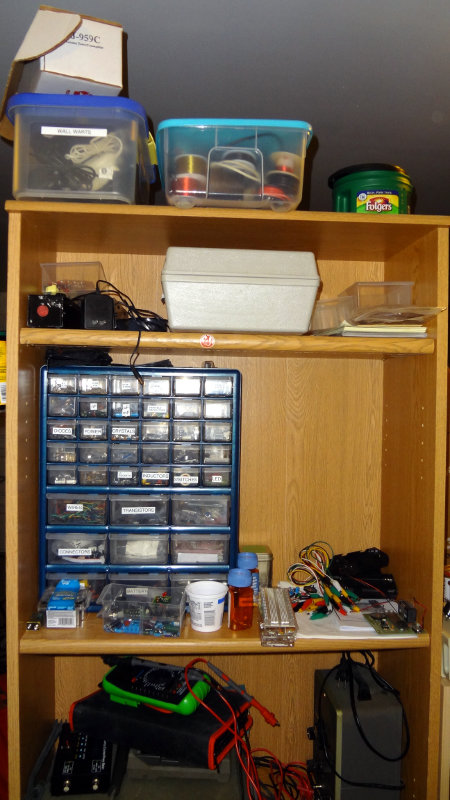
A bookshelf containing electronic tools and boxes of electronics parts

The one bookcase on the right needs me to put in another shelf or two. More parts bins and stuff that needs to be put away properly.
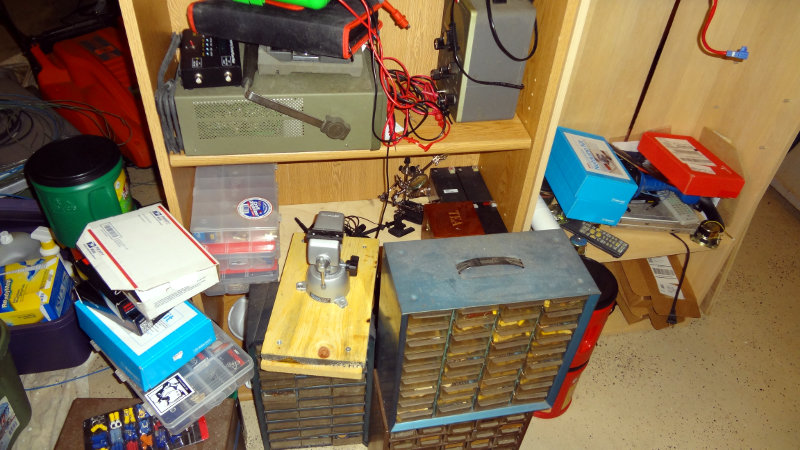
Parts bins and electronics components

The workbench itself is starting to get a little cluttered.
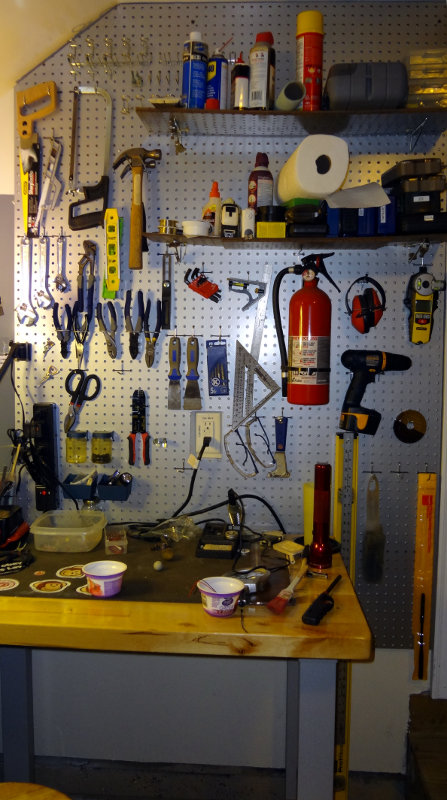
Tools hanging on pegboard mounted on a wall and a workbench

The Radio Shack soldering station has been working out pretty well, especially after I replaced the stock tip. It’s not fancy, but it gets hot enough to melt solder, which is really what counts. I’ve found that yogurt cups make great containers for holding components while I’m working on a project. An old paint brush is very useful for sweeping up the dust, wire trimmings and little bits of solder that end up on the bench.
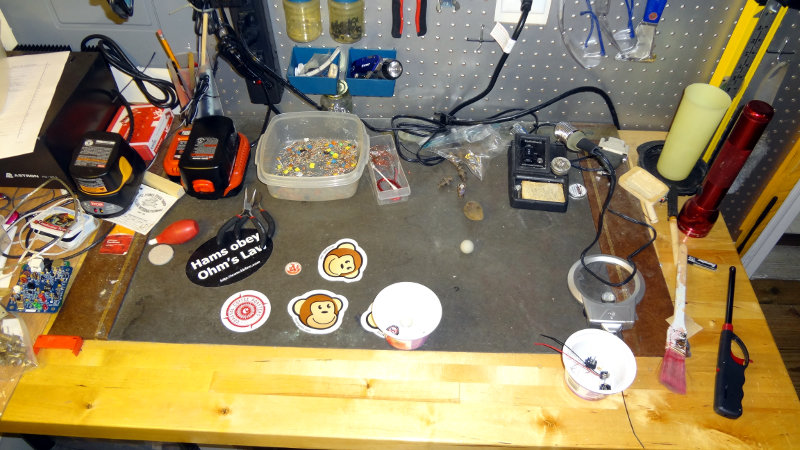
The Astron RS-35A provides a nice source of 13.7V power for the bench, although I’d eventually like to get a variable power supply so that I don’t have to keep rummaging through the wall warts to find something suitable.
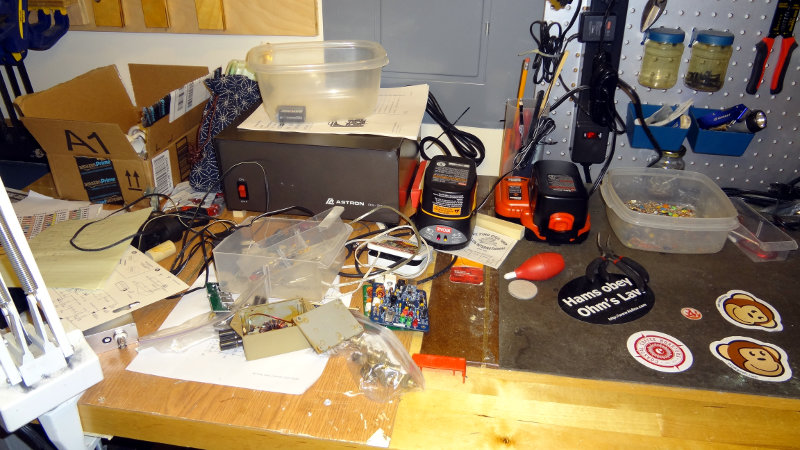
The only problem with having the workbench in the garage is that temperature control isn’t that great. A little portable heater for the winter and a box fan for the summer come in pretty handy though.
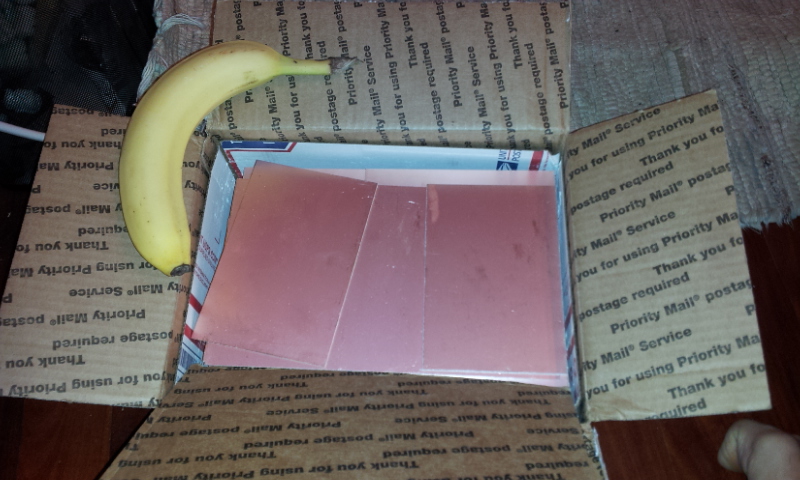
Moar copper clad

An order of 20lb of copper clad PCB arrived, getting me closer to my goal of having the workshop stocked well enough so that I can build and experiment without triggering that “can’t use it because I’m running low” instinct.

CuPCB.jpg
Box of copper-clad PCB

(Banana for scale)

This is my second order from Copper Clad Laminates on ebay, and so far I’ve been pretty pleased with the product. This was one of his bulk items containing boards that maybe aren’t the right size, have some light scratches or other imperfections that wouldn’t qualify them for a regular batch, but are more than suitable for my purposes. It’s all double sided and there’s a nice variety of sizes too. At $1.05/lb, it’s a pretty good deal.

Adding to the *uinos

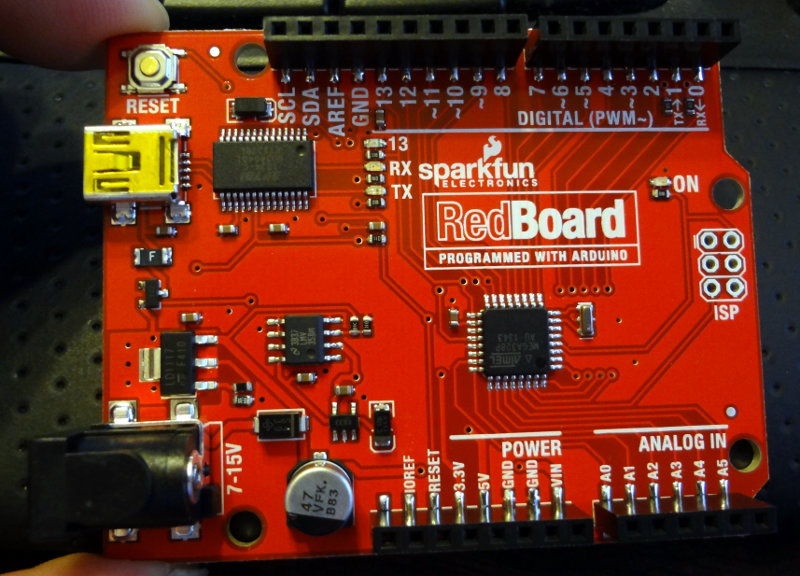
The two Sparkfun RedBoards I ordered during their Arduino Day sale arrived yesterday.

DSC01512.JPG
Sparkfun RedBoard

With the two RedBoards, the Netduinos, and the Ham Radio for Arduino and PICAXE book I picked up a couple weeks ago, I should have a lot of fun exploring and playing. Now I’ll have to start accumulating shields…

I think I’m going to need a new project box to store these boards in now.

IC Inventory

After using up some spare time over the period of a few weeks, I finally finished going through the parts bin of ICs and inventoried them. Right now it’s a big long list in a Google Drive spreadsheet.

I don’t know what most of them do, have no idea if any of them are still functional and probably won’t ever use any of them, but I did have fun going through them, digging up datasheets for them and reading the descriptions for each of the chips. Datasheets for most of them were pretty easy to find, while a few others I had to dig a bit. There were a handful that I wasn’t able to find anything on.

About a half dozen of the bins had EEPROMs in them, which I ignored for the most part. One bin had a stash of 555 timer chips that could find some use in a project if they work. There are CPUs, digital logic gates, op amps, buffers, registers, counters, even some RAM chips. If I had the know-how, I’ve probably got just about everything I need to assemble a simple computer based on the Z80 CPUs I found in the bins.

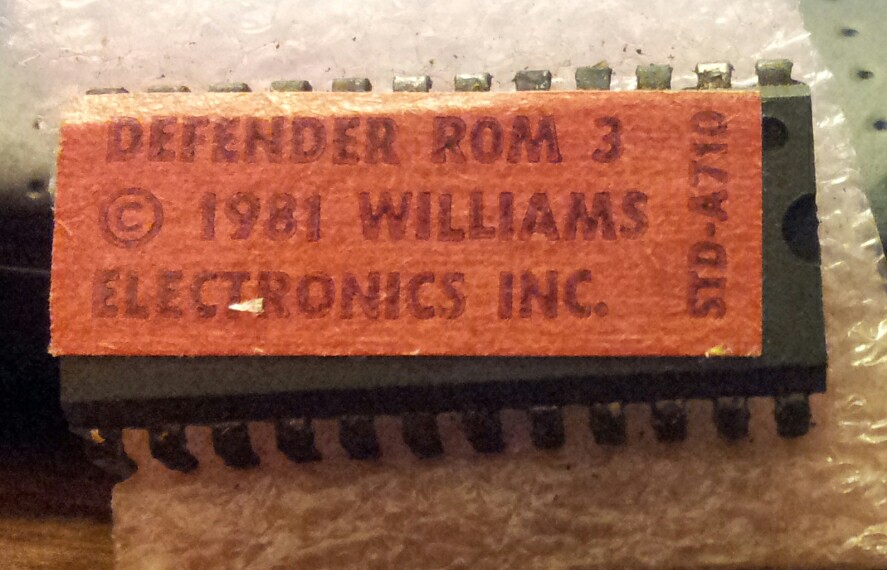
One interesting find in one of the bins was this Defender ROM.

DefenderROM.jpg

Absolutely no idea if it’s any good, but it would be neat to plug into a Defender console and see if it does work.

Exploring Arduino

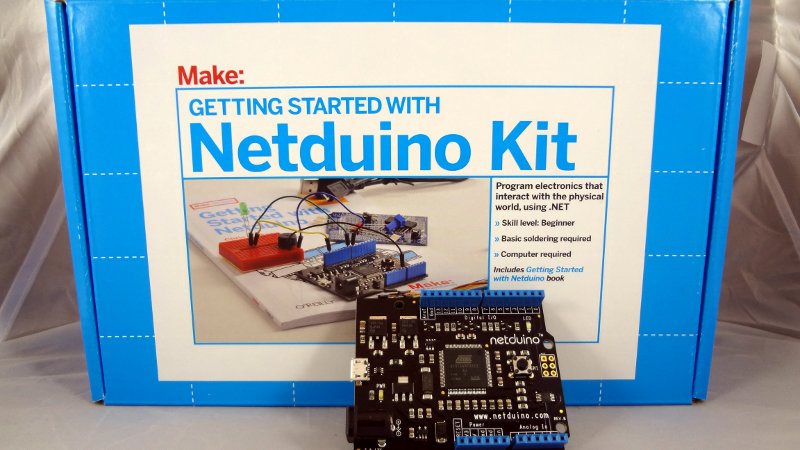
I found the Make Getting Started with Netduino kits on clearance at Radio Shack for $20, so I decided to pick one up (rescuing more clearance items). Figured it would be a good way for me to get my feet wet in the Arduino and microcontroller world.

A Make: Getting started with Netduino kit and a Netduino board

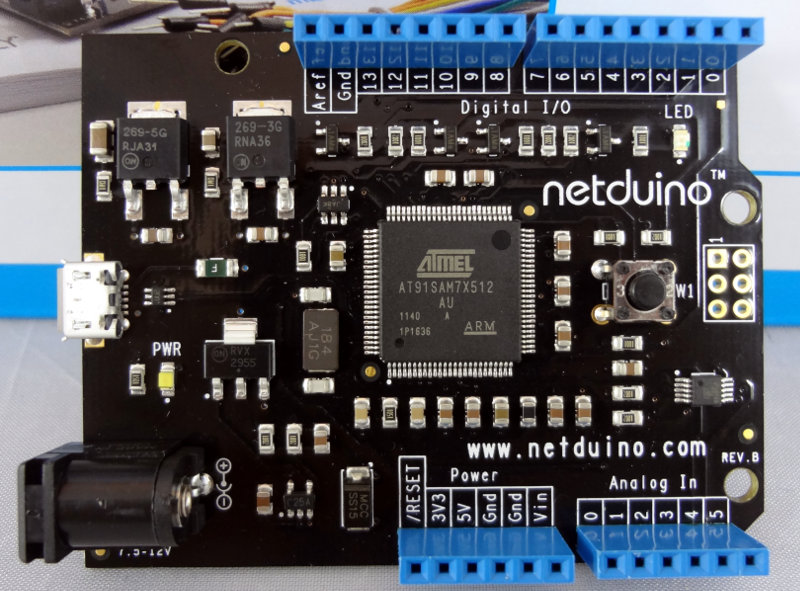
The board it self is pretty small, maybe a little smaller than 10x10cm.

A Netduino microcontroller board.  The board has the same form factor as an Arduino microcontroller board.

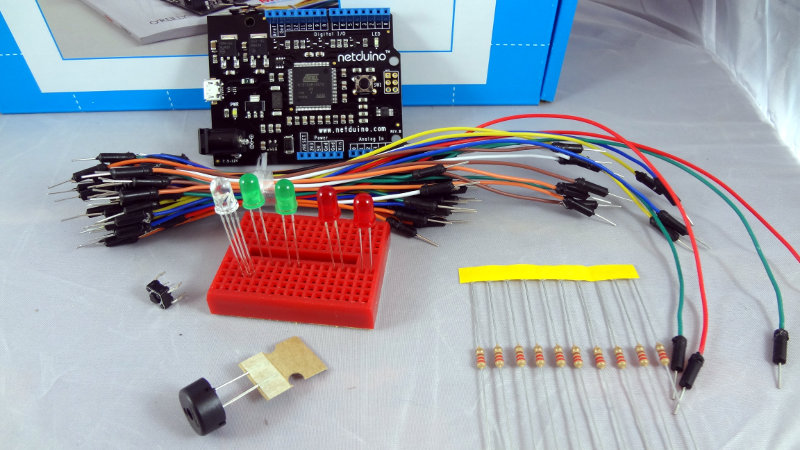
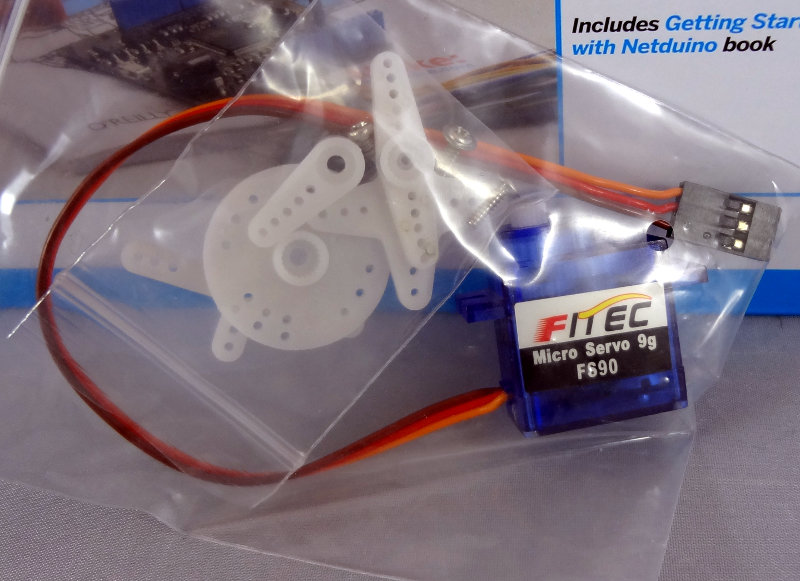
The kit contains everything you need for the basics like making LEDs blink, a little speaker, a little bread board for prototyping and even a servo motor.

A Netduino microcontroller board, bundle of connector wires, a red mini breadboard with some LEDs in it, a small push button, speaker, and a strip of resistors
Ziplock bags that contain a small servo motor

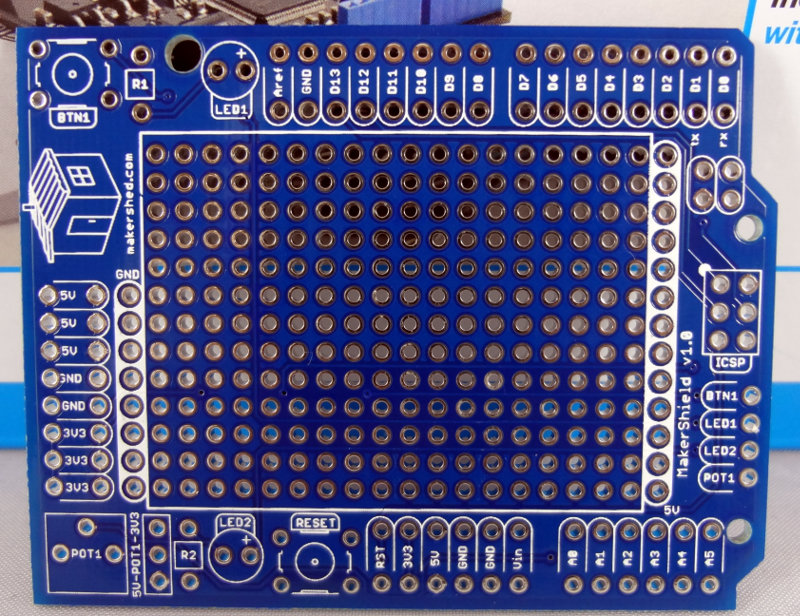
There’s even a MakerShield included for building your own Arduino shield.

Makershield prototyping board

I’ll have to deal with C# and .NET, but I don’t think it should be too difficult. I’m looking forward to learning and playing with it.